
Vilasini Natyam: The Resonating Reverberations Of Vilasinis,The Dance That Is Reimbursed From The Hush
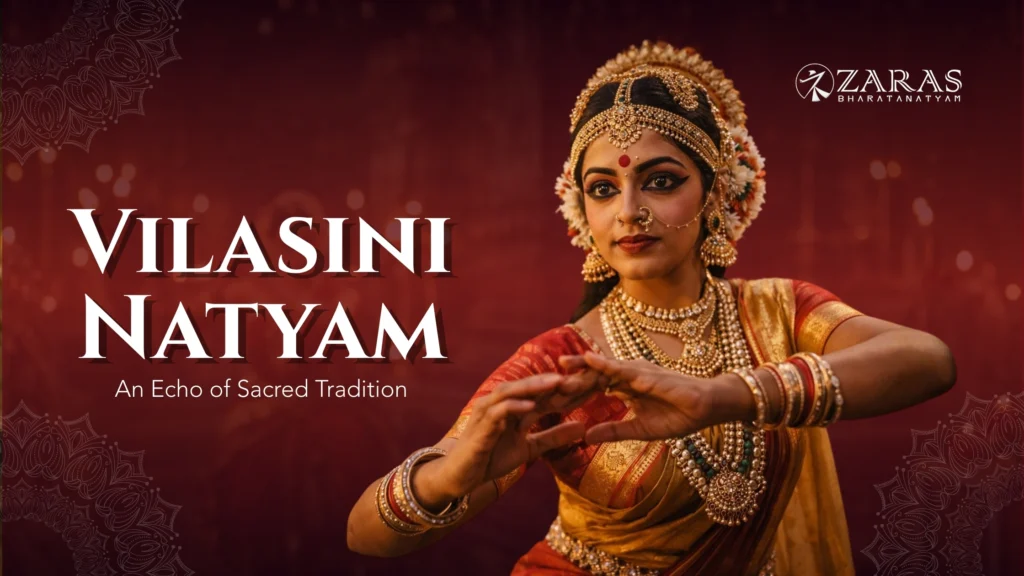
Vilasini Natyam is a time revered and unambiguous conventional art form that received its origin from Andhra Pradesh. It’s voguish and contemporary regeneration and restructuring of ancestral and ceremonial dance paradigm namely bharatham. This revered form was aboriginally and indigenously performed by the primordial and connate dancers who were authentically known as Vilasinis, bhoginis, kalavantulu (devadasis).
The prevalence and acclamation this unparalleled and unsurpassed dance form holds and sways is exponentially noteworthy and laudable. It also must be recounted with a chronological profundity and vastitude that is alluded to , for its panache, grandeur and deftness. The moorings of this art form can be tracked down to the spiritual and aesthetic idiosyncrasies of Telugu populace.
The performers of this art who are designated as devadasis, the literal meaning being, servants of God, were highly glorified,lionized and lauded as multi talented dancers who are habile and virtuoso in vocals as well. They are celestially fused to the temples ,royal courts and were the seraphic conservators of this art effectuating and presenting dual services viz- Nitya seva and Naimitya seva.
In Nitya seva they do systematic, genteel and ceremonial veneration and imploration to the deities per diem. Naimitya sevas are intermittent services rendered for the sake of pre occupying, delighting and fascinating the multitudinous audience from variegated domain, metier and realms of life comprising of intellectuals, royals and public. Eloquent and exquisite renditions like Saani Aata,or Bhogam Aata are effectuated before the regal subjects and Bayalu Aata is executed for the public
There are two classifications of Vilasini natyam, that which is effectuated by men and the other by women. The Natya executed by men are called purusha sampradhayam and by women are called sthree sampradhayam.Women dancers are labelled as, saanis, bhogini, swamini, Vilasini, vidya vilasini, bhogam and kalavati.
The anti devadasi act passed against the practice and perpetuation of the devadasi system which was ubiquitous in South India at that period, due to the fluctuations in the Indian political climate coupled with the invasion of British colonists the guardianship, propagation and presentation of this atavistic art form was literally terminated. As a grave consequence the art form was plunged into nullity and the vilasinis almost came to an annihilation.
But fortunately this art form got resurrected and reinvigorated tremendously, massively and capaciously by the incessant and assiduous revitalizing activity predominantly by the proficient and versatile dance crusader Padma Bhushan swapna sundari. To sanctify and approbate the divine practitioners and the tradition this art form is behoovingly and becomingly designated with the title Vilasini Natyam by a panel of scholars efficaciously headed by padma Bhushan swapna sundari and Dr. Arudra.
In spite of all the appalling and mortifying backlash this cardinal dance form materialized and came to the fore as a bedazzling Kohinoor charm of South India.
