
Koraga Nritya: The Numinous Prance Connoted to Preserve & Purge,Where men manifest Draupadi
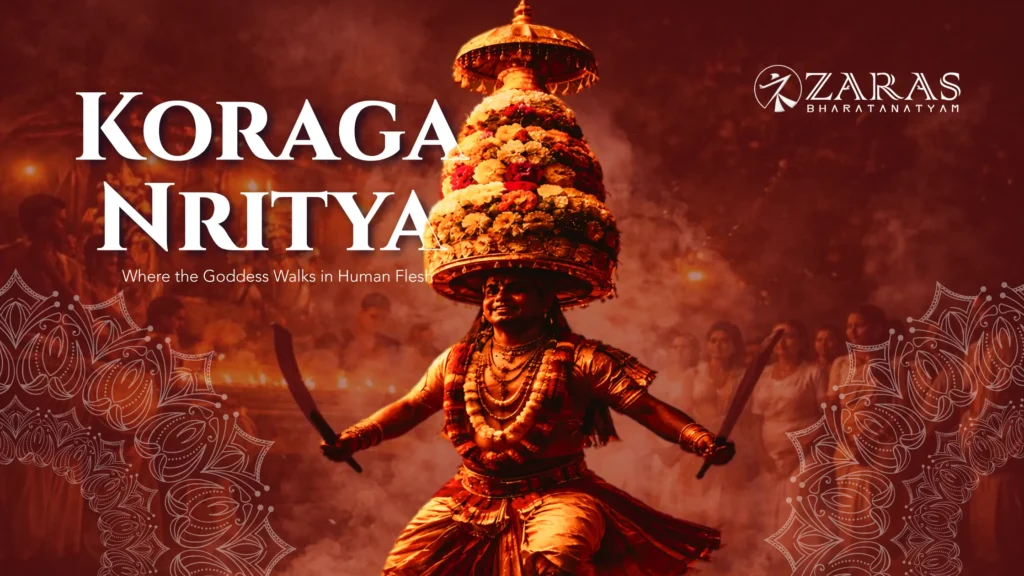
First and foremost, Koraga Nritya or karaga is a renowned ethnic folk dance of Karnataka, primarily devoted to princess Draupati or Droupadamma. This art is staged with accompaniment of liturgical parade, drummings and above all a karaga carried on the head of the dancer, typifying and epitomizing celestial feminine charm and grace. This dance with an epic background is usually staged during the purnima night. Koraga Nritya is typically enacted by the Tigala community of Karnataka who profess, assert and claim themselves as the specially privileged progeny of Draupati. They are floriculturists by profession. This art and it’s conventional lores are closely analogous and pertinent to epic Mahakavya Mahabharata.
The chief triple scenes widely performed are Vastrakshepa of Draupati, deportation and exile of the pandavas from Hastinapuri and extirpation of Draupati’s Son Abhimanyu by the most treacherous chiranjeevi Ashwattama. This dance is staged during the propitious and felicitous occasions like weddings, hamlet bean feast and Bhuta kola (spirit worship) rites and rituals. It is executed powerfully to drive away the vicious and malicious spirits. The lilting shifts are supposed to conduit the potentiality and vitality of the earth.
Another striking feature of this particular dance performance is the dancers adeptly and dexterously balancing a pyramid like pot embellished with flowers on the head. Usually the role of Draupati is gracefully, charmingly and unerringly enacted by men of Tigala community.
Another sensational phenomenon of this particular dance form is the wives of the artists tentatively act as widows imparting their mangalsutra and bangles to their husbands. The willfully adopted status or role is retained till the culmination of the dance. They won’t see their husband or the pot till the end of the Jamboree. Variegated categories and varieties of Koraga dance are feted and solemnized in various parts of Karnataka, they are Naraspura Koraga and Madikeri Koraga. Hasi Koraga and Hoovani Koraga.
The dance is demarcated or distinguished by the unbridled power, primal force and contemporaneousness. The dancers pirouette in an orbicular array illustrating and rendering the recurring, repetitive and seasonal aspect of life. Dazzling legwork is strong and ingrained, reiterating, reinforcing and spotlighting the bond and affinity with the soil. A conspicuous and remarkable feature of Koraga Nritya is the koraga Dolu the percussion device used for accentuating the music.
During ancient days there was a time when these artists witnessed sheer negligence, excommunication and ostracisation. Their music and art were despised, discarded, rejected and pushed, to an oblivious milieu of the society. But time and tide shifted offering a new birth and dimension to this art form making it emerge as the pride, cream and crown of the tribals of Karnataka. The government has taken very stringent measures to provide this art form a reinvigorated and revitalized position. Summing up, koraga Nitya has escalated, from the outskirts disposition of hamlet liturgy to procuring the limelight reality in the state level cultural carnival .
